🎉 Multiple Papers of Our Team Have Been Accepted by ACM MM 2022

We are thrilled to announce that ACM MM 2022 has officially released the list of accepted papers, and multiple papers from our team are included! This is a significant achievement showcasing the outstanding research quality of our laboratory.
About ACM MM 2022
The ACM International Conference on Multimedia (ACM MM) is the premier international conference in the field of multimedia, covering all aspects of multimedia computing, from underlying technologies to applications, theory to practice, and servers to networks.
ACM MM is recognized as one of the top-tier international conferences in multimedia and computer vision, attracting the world's leading researchers and practitioners in multimedia technology.
Featured Paper: Cross-Modality High-Frequency Transformer for MR Image Super-Resolution
📄 Cross-Modality High-Frequency Transformer for MR Image Super-Resolution
Authors: Chaowei Fang (方超伟), Dingwen Zhang (张鼎文), Liang Wang (王良), Lechao Cheng (程乐超), Junwei Han (韩军伟)
Conference: ACM International Conference on Multimedia 2022
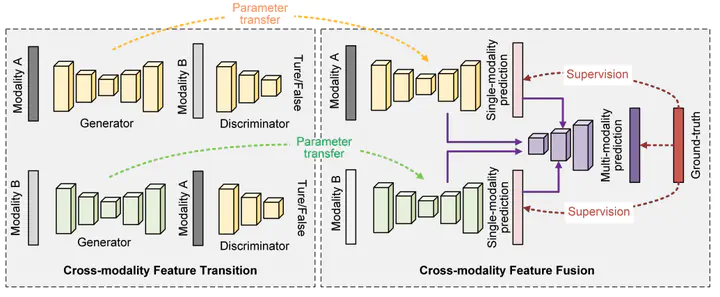
Research Background
Improving the resolution of magnetic resonance (MR) image data is critical to computer-aided diagnosis and brain function analysis. Higher resolution helps to capture more detailed content, which is essential for:
- Computer-aided diagnosis - Enabling more accurate disease detection and analysis
- Brain function analysis - Better understanding of neural activity and structures
- Medical research - Advancing our knowledge of human anatomy and pathology
However, acquiring high-resolution MR images typically induces:
- Lower signal-to-noise ratio - Reduced image quality
- Longer scanning time - Patient discomfort and increased costs
To address these challenges, MR image super-resolution has become a widely-interested research topic in recent times.
Key Innovation
Existing works establish extensive deep models with conventional architectures based on Convolutional Neural Networks (CNN). In this work, to further advance this research field, our team makes an early effort to build a Transformer-based MR image super-resolution framework, with careful designs on exploring valuable domain prior knowledge.
Novel Architecture: Cross-modality High-frequency Transformer (Cohf-T)
Our research considers two-fold domain priors and establishes a novel Transformer architecture called Cross-modality High-frequency Transformer (Cohf-T) to introduce such priors into super-resolving low-resolution (LR) MR images:
1. High-Frequency Structure Prior
The high-frequency structure prior captures fine-grained details and edges in MR images, which are crucial for accurate diagnosis. This prior helps the model focus on preserving and enhancing important structural information during the super-resolution process.
2. Inter-Modality Context Prior
The inter-modality context prior leverages complementary information from different MR imaging modalities (e.g., T1-weighted, T2-weighted). By exploiting the relationships between different modalities, the model can generate more accurate and detailed high-resolution images.
Technical Advantages
The proposed Cohf-T framework offers several key advantages:
- Transformer Architecture - First to apply Transformer to MR image super-resolution, enabling better long-range dependency modeling
- Domain Prior Integration - Carefully designed to incorporate high-frequency structure and cross-modality context priors
- Superior Performance - Achieves state-of-the-art results on benchmark datasets
- Efficient Learning - Learns meaningful representations by exploiting domain-specific knowledge
Experimental Results
Comprehensive experiments on two benchmark datasets demonstrate that:
- Cohf-T achieves new state-of-the-art performance in MR image super-resolution
- The model significantly outperforms existing CNN-based methods
- Both quantitative metrics and visual quality show substantial improvements
- The framework generalizes well across different MR imaging modalities
Research Significance
This research makes several important contributions to the field:
- 🔬 Pioneering Work - Among the first to apply Transformer architecture to MR image super-resolution
- 💡 Novel Framework - Innovative integration of domain priors into deep learning models
- 🏆 State-of-the-Art Results - Achieves best performance on benchmark datasets
- 🏥 Clinical Impact - Potential to improve medical diagnosis and patient care
- 🌟 Future Research - Opens new directions for medical image processing research
Impact on Medical Imaging
The successful application of this technology can have far-reaching implications for medical practice:
- Reduced Scanning Time - Patients spend less time in MRI scanners, improving comfort and throughput
- Enhanced Diagnostic Accuracy - Higher resolution images enable more precise diagnosis
- Cost Efficiency - Shorter scanning times reduce operational costs
- Broader Accessibility - Makes high-quality MR imaging more accessible to healthcare facilities
Conclusion
We are extremely proud of our team's achievement in having multiple papers accepted by ACM MM 2022, one of the most prestigious conferences in multimedia and computer vision. The featured work on Cross-Modality High-Frequency Transformer for MR Image Super-Resolution represents a significant advancement in medical image processing.
This acceptance reflects the high quality of research conducted in our laboratory and demonstrates our team's capability to push the boundaries of multimedia technology and its applications in medical imaging.
Congratulations to all team members involved in this research! 🎊